
As an Amazon Associate I earn from qualifying purchases. This guide is based on manufacturer specifications and published information, not hands-on testing. Running costs use the Ofgem price cap average electricity rate of 26.32p per kWh (1 October to 31 December 2026, Direct Debit).
Heating one small room with a portable electric heater can make more sense than turning the central heating up for the whole house, especially if you work from home or only use one room in the evening. But not all heaters suit every room. This guide explains the main types, what they cost to run, and three well-reviewed options.
Every electric heater is equally efficient
This surprises many people. A plug-in electric heater turns essentially all the electricity it uses into heat, so a 2kW fan heater and a 2kW oil-filled radiator cost exactly the same per hour at full power. What differs is how they deliver the heat: quickly and in bursts, or slowly and steadily. That affects comfort, and how long you need to run them.
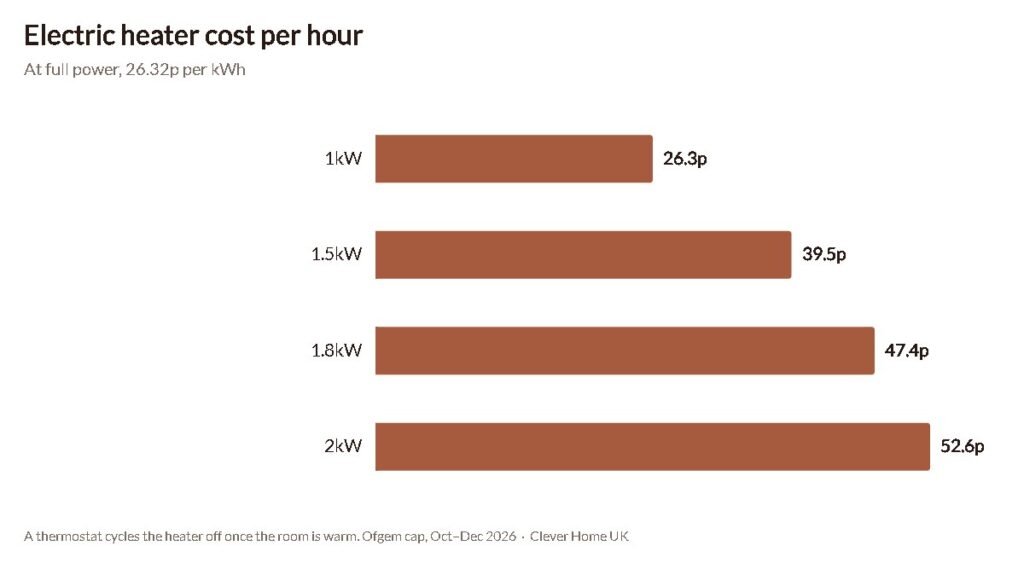
Running costs at a glance
| Heater power | Cost per hour | 4 hours | 8 hours |
|---|---|---|---|
| 1kW | 26.3p | £1.05 | £2.11 |
| 1.5kW | 39.5p | £1.58 | £3.16 |
| 1.8kW | 47.4p | £1.90 | £3.79 |
| 2kW | 52.6p | £2.11 | £4.21 |
At 26.32p per kWh, running at full power. A heater with a thermostat cycles on and off once the room is warm, so the real cost is usually lower.
The main types
Fan and ceramic fan heaters
These blow warm air out quickly, so a cold room feels warm within minutes. They are small, light and cheap to buy. They can be noisy, and the warmth fades fast when they switch off. Best for short bursts, such as warming a bathroom or a study before you sit down.
Oil-filled and oil-free radiators
These heat up slowly but release heat steadily and silently, and the body stays warm for a while after the thermostat clicks off. Best for bedrooms and home offices where you want gentle warmth over several hours.
Convector and panel heaters
These warm the air, which then circulates around the room. They are quiet and often slim enough to wall-mount. They are a middle ground between fan heaters and radiators.
Halogen heaters
These warm you directly, like sunshine, rather than heating the air. They feel warm instantly when you sit in front of them, but they do little to raise the temperature of the room as a whole.
Three heaters worth a look
De’Longhi Capsule HFX30C18: compact ceramic fan heater
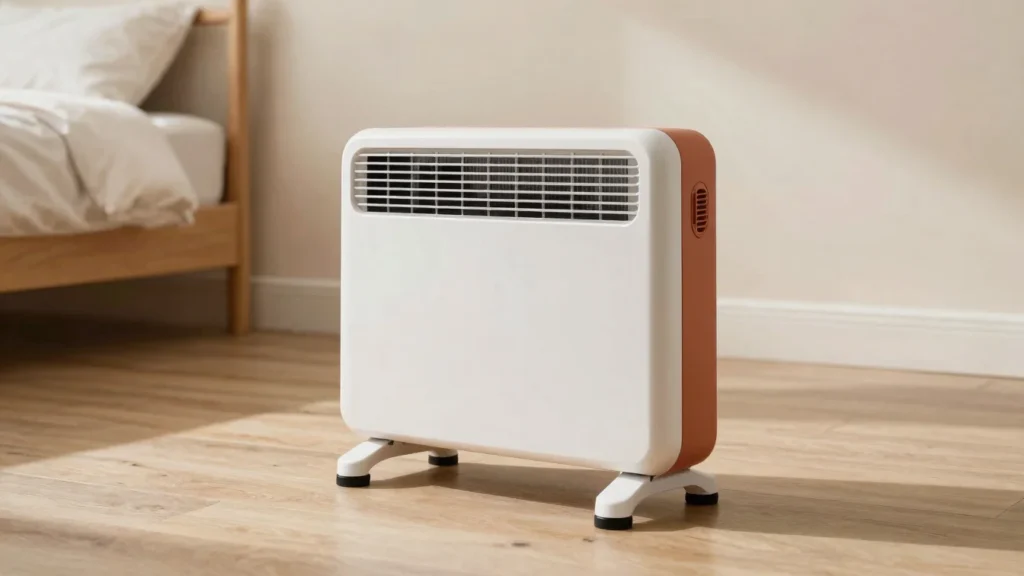
A small ceramic fan heater rated at 1.8kW with two power settings and an adjustable thermostat. At full power that is about 47.4p an hour, and the lower setting costs less. Its size makes it easy to move between rooms or tuck under a desk.
- Good for: quick warmth in a study, bathroom or box room
- Watch out for: no timer, and fan noise while it runs
Dimplex ECR20 Tie: oil-free radiator with a timer
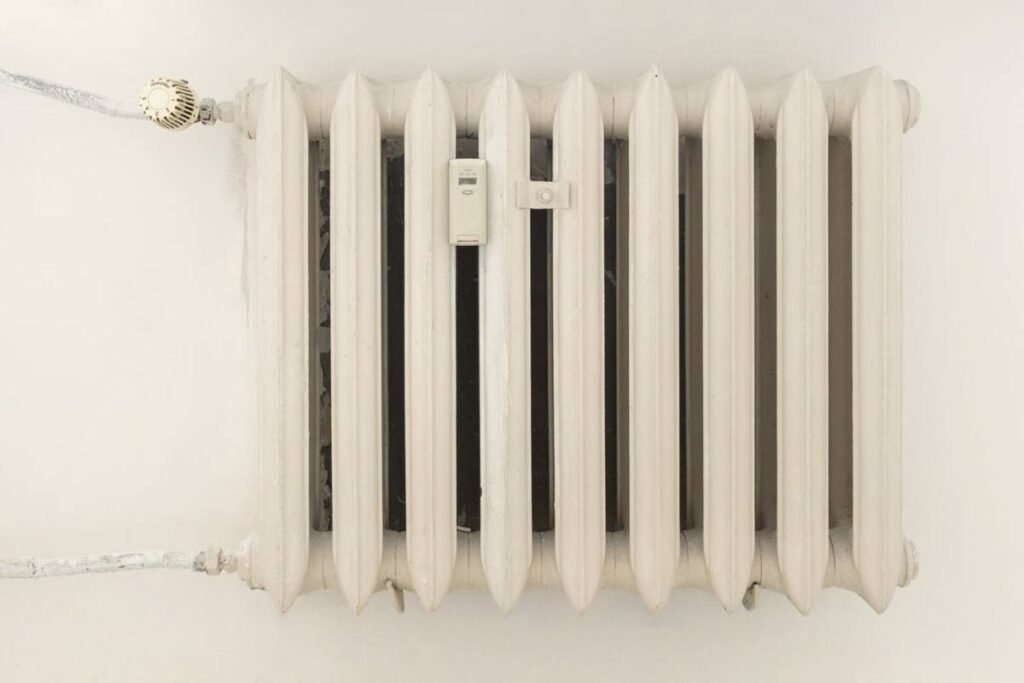
An oil-free electric radiator rated at 2kW, with three heat settings, a thermostat and a built-in timer with an LCD display. The timer is the useful part: you can have a bedroom or office warm when you need it, then switch off automatically. Running it on a lower setting cuts the hourly cost.
- Good for: bedrooms and home offices used for hours at a time
- Watch out for: slower to warm a room than a fan heater
Dimplex ECR15: a smaller oil-free radiator

The 1.5kW little sibling of the ECR20, with simple manual controls and no timer. At full power it costs about 39.5p an hour, and the thermostat cuts that once a small room is warm. A good fit for a box room or study where 2kW would be more than you need.
- Good for: small bedrooms and studies, quiet steady warmth
- Watch out for: no timer, so use a plug-in timer if you want it to switch off automatically
Choosing the right size
For a small bedroom or study, 1 to 1.5kW is usually enough once the room is warm, and a 2kW heater on its lower setting does the same job with power to spare on very cold days. Bigger is not more expensive by itself: what matters is how many kilowatt-hours you use, and a thermostat keeps that in check.
Safety tips
- Plug heaters directly into a wall socket rather than an extension lead.
- Keep at least a metre of clear space around them, away from curtains, bedding and furniture.
- Never cover a heater or dry clothes on it.
- Choose a model with overheat protection and a tip-over switch.
- Switch it off when you leave the room or go to sleep, unless it is designed and timed for that.

The bottom line
For long stretches in one room, an oil-free radiator with a timer such as the Dimplex ECR20 gives steady, quiet warmth. For quick bursts, a compact ceramic heater like the De’Longhi Capsule heats a small room fast. For a very small room, the 1.5kW Dimplex ECR15 is a quieter, steadier option. Whichever you choose, use the thermostat and keep the door closed, so you are paying to heat only the space you are using.